
Low-Maintenance Haircuts That Still Look Stylish
Discover low-maintenance haircuts that look stylish with minimal daily effort, chosen for your hair type, face shape, and lifestyle.
Stylish hair has a reputation for requiring significant daily effort, and for many popular styles that reputation is entirely earned. The meticulously blown-out blowdry, the perfectly defined curls, the smooth and sleek…
The Real Cost of High-Maintenance Hair
Stylish hair has a reputation for requiring significant daily effort, and for many popular styles that reputation is entirely earned. The meticulously blown-out blowdry, the perfectly defined curls, the smooth and sleek style that stays in place through an entire working day: all of these looks require time, the right tools, and a degree of daily commitment that is simply not compatible with every lifestyle. The assumption that follows is equally common: that low-maintenance hair must mean hair that looks unremarkable, uninspired, or as though no thought was given to it at all.
That assumption is wrong, and correcting it is one of the more useful things a professional stylist can do for a client. The distinction between a high-maintenance style and a low-maintenance one is not a distinction between styled and unstyled, or between effort and apathy. It is a distinction between styles that require constant intervention to look their best and styles that are architecturally designed to look good with minimal daily input. The latter category is broader than most people realise and includes some of the most current and genuinely sophisticated cuts available.
The key to a genuinely low-maintenance haircut is understanding what makes a style require effort in the first place. Styles that rely on precise blow-drying direction, on product application to achieve a specific texture, on heat styling to create movement or smoothness, or on multiple steps to achieve the final look are inherently time-intensive. Styles that work with the hair's natural texture, that have structural integrity without product, and that grow out gracefully without losing their fundamental shape are the foundation of a low-maintenance approach.
What Makes a Haircut Genuinely Low-Maintenance
Structure Over Styling
The most reliably low-maintenance haircuts are those where the shape is created by the cut itself rather than by the styling routine that follows. A blunt bob with a clean perimeter line holds its shape without requiring blow-drying in a specific direction. A well-cut pixie relies on the precision of the cut to give it structure, not on the application of product each morning. A layered cut designed to enhance the hair's natural wave pattern looks better air-dried than many styles look after extensive styling.
This principle, that structure should come from the cut rather than from styling, is one of the clearest ways to evaluate whether a proposed style is genuinely low-maintenance or merely marketed as such. If a style looks great in the salon because it was blown out for forty minutes after the cut and requires that same forty-minute routine daily to maintain the result, it is a high-maintenance style presented in a low-maintenance context. A stylist who understands what the client needs will recommend cuts that hold their shape through multiple days and multiple wash-and-wear cycles without losing the quality of the result.
Working With Natural Texture
Hair texture is one of the most significant variables in determining how much daily effort a style requires. Styles that work with the hair's natural behaviour, enhancing wave, embracing volume, or making use of the hair's natural tendencies, require far less intervention than styles that work against it. Trying to keep naturally wavy hair perfectly straight, or trying to add volume and movement to very fine, flat hair, requires ongoing effort because the result being pursued is the opposite of what the hair wants to do.
The most effective low-maintenance approach for textured or wavy hair is a cut that is specifically designed for the hair's natural pattern, with layers placed to encourage the wave to form consistently rather than fighting against the cut's shape. For fine hair, cuts that avoid excessive layering, which can make thin hair appear even thinner, and that use blunt lines to create the impression of weight and density are better suited to a low-effort routine. In both cases, the stylist's understanding of the specific hair type is what determines whether the recommendation is genuinely appropriate or a standard suggestion applied without real personalisation.
Grow-Out Behaviour
A dimension of low maintenance that is frequently overlooked at the point of choosing a style is how well the cut grows out. Some styles look excellent immediately after the appointment and begin to deteriorate visibly within three or four weeks as the shape loses its precision. These styles require frequent salon visits to maintain their quality, which is a form of high maintenance even if the daily styling routine is simple. Other styles are designed with grow-out in mind, maintaining their fundamental shape and character for eight to twelve weeks between appointments.
Understanding grow-out behaviour is particularly important for clients who want to extend the interval between appointments as much as possible, whether for reasons of budget, schedule, or simply personal preference. A longer grow-out style that remains wearable for ten or twelve weeks is significantly lower maintenance over the course of a year than a precision cut that requires a visit every four weeks to retain its integrity.
The Best Low-Maintenance Cuts for Different Hair Types
For Straight Hair
Straight hair is most commonly associated with styles that require blow-drying to add movement or volume. But for clients who want to reduce their styling time, a well-executed blunt bob or lob at a length that suits the face provides a clean, polished look that air-dries into a presentable shape without extensive intervention. The blunt line at the perimeter gives the style its character, and that character persists through the grow-out period better than heavily layered alternatives.
For longer straight hair, a simple one-length cut with minimal graduation provides a style that is easy to wear down, easy to tie back, and easy to maintain between appointments. Adding too many layers to straight hair without the texture to support them can result in a style that looks unfinished when it air-dries, requiring styling to achieve the intended result. The simpler the construction of the cut, the more reliably it performs without intervention.
For Wavy and Curly Hair
Wavy and curly hair often presents the greatest gap between client aspiration and styling reality. The desire to wear the natural texture confidently is increasingly common, but many clients have spent years fighting their hair's natural pattern with heat styling and find the transition to embracing it both appealing and uncertain. The right cut is the foundation of that transition.
For wavy hair, layers that are placed to enhance the wave pattern rather than weigh it down allow the hair to move naturally and dry into a presentable shape with minimal intervention. For curly hair, cuts that respect the curl pattern and avoid creating uneven bulk are the starting point for genuinely low-maintenance styling. In both cases, the consultation should include a detailed discussion of the natural pattern so that the cut is designed around what the hair actually does rather than around a theoretical ideal.
For Thick Hair
Thick hair carries its own maintenance challenges. Without the right cut, thick hair can feel heavy, take a long time to dry, and become difficult to manage between washes. The most effective low-maintenance cuts for thick hair use internal layering to remove bulk and reduce weight without significantly changing the perimeter shape. This approach makes the hair easier to handle daily without requiring the client to commit to a style that looks very different from their current length.
Avoiding excessive graduation or thinning at the ends, which can cause thick hair to appear triangular as it grows, is an important technical consideration for thick-haired clients seeking low-maintenance styles. The goal is to manage the volume intelligently at the cutting stage rather than relying on daily styling to control what the cut has not resolved.
Investment vs Return: How Often You Need to Visit the Salon
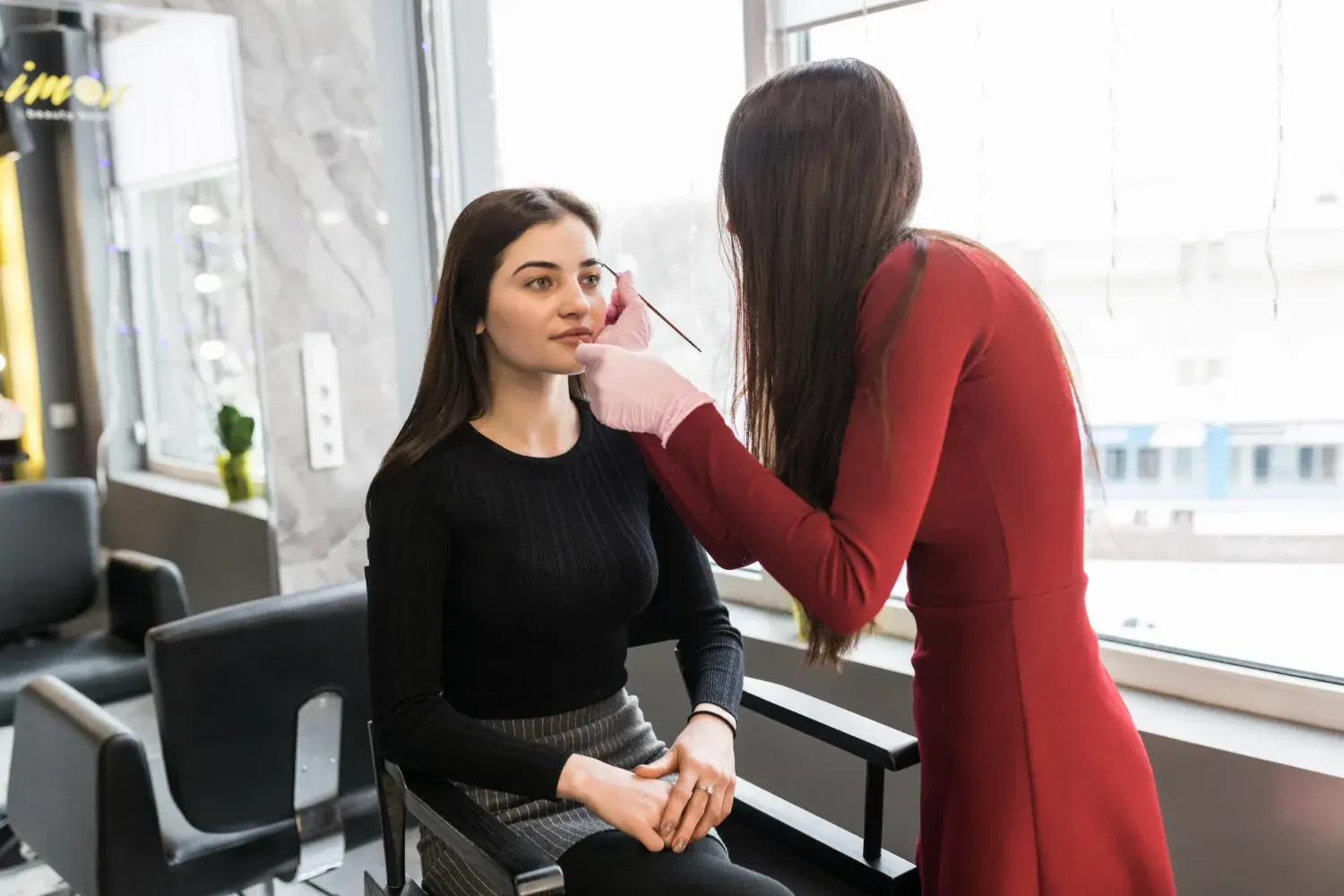
The economics of low-maintenance hair are worth considering explicitly. A precision cut that requires a visit every four weeks costs significantly more over a twelve-month period than a lower-maintenance style that holds its quality for ten or twelve weeks. The initial cost of the appointment may be similar, but the annual total is substantially different. For clients who are mindful of their haircare budget, choosing a style with an extended grow-out profile is not just a matter of convenience; it is a financially sensible decision.
It is also worth noting that the cost of daily styling products and tools adds to the true cost of a high-maintenance style. Clients who currently spend significant amounts on serums, sprays, heat protectants, and styling tools to maintain their look often find that a low-maintenance cut reduces that expenditure significantly. The haircut that requires less daily input often costs less over time than the one that appears less expensive at the point of purchase.
For clients who want to explore which low-maintenance options are realistic for their specific hair type and face shape, a consultation with our stylists is the most reliable starting point. Our range of professional hair cuts is delivered by a team experienced in finding styles that genuinely perform between appointments.
Conclusion
Low-maintenance does not mean unstyled, and it certainly does not mean settling for a result that fails to represent you well. The right haircut, chosen with expert understanding of your hair type, face shape, and daily routine, can look consistently polished with minimal daily effort. The investment is in the quality of the cut rather than in the time required to style it each morning. To find the low-maintenance style that works for you, book your appointment with our team today.
Ready to book your next appointment?
Every visit to TopOne Richmond starts with a one-to-one consultation, so your cut, colour or treatment is tailored to your hair, your features and your routine.
Visit us in Richmond
TopOne is a hair salon in Richmond at 31 The Quadrant, TW9 1DN. A short walk from Richmond station, open Tuesday to Saturday.
More from the blog

31 May 2026
The Best Haircuts for Thin Thick and Curly Hair
Discover the best haircuts for fine, thick, and curly hair types with expert guidance on which styles work and which to avoid for each texture.

31 May 2026
How Often Should You Get a Haircut? A Complete Guide
Find out exactly how often you should get a haircut based on your style, hair type, and condition with this expert complete guide.

31 May 2026
Men's vs Women's Haircuts: What's the Real Difference?
Explore the real technical and conventional differences between men's and women's haircuts to make a more informed choice about your next visit.
Ready to book your next appointment?
At TopOne Hair & Beauty Richmond, we believe in results that last. Not just on the day, but in the weeks that follow.